


Personal Care Assistance: Help with Washing, Dressing and Daily Personal Care
Personal care assistance is practical, respectful help with the most private parts of daily life, such as washing, dressing, grooming and using the toilet. It lets someone who finds these tasks hard stay clean, comfortable and dignified at home, while still doing as much as they can for themselves.
This guide explains what help with washing and dressing involves, what daily personal care covers, how personal care at home is arranged and what to ask before you start. It is written for families in Leeds, and it explains which services BC CARE LTD provides based on what its website confirms.
What Is Personal Care Assistance?
Personal care assistance means a trained carer helps with the tasks that keep someone clean, groomed and comfortable. You may also see it described as personal care services, daily personal care or domiciliary personal care, which simply means personal support delivered in the person’s own home. In the home care sector it is sometimes called home care personal care.
Elderly personal care assistance is the most common form, but the same support helps adults recovering from illness, people with disabilities and people living with dementia. It is different from nursing, which covers clinical tasks such as wound care.
Good personal care assistance is about maintaining dignity and independence. The carer supports rather than takes over, so the person keeps as much control as possible. That is the heart of promoting independent living and elderly care at home.
In England, providers of personal care must be registered with the Care Quality Commission, so check a provider’s latest inspection report. BC CARE LTD provides personal care as one of its services, alongside personalised domiciliary care.
[IMAGE 1: see Image Planning below]
Help with Washing and Dressing
Help with washing and dressing is usually the first support families arrange, and it is often where small changes in someone’s health first show.
Bathing and Showering Support
Bathing and showering support is often the task that worries families most, because wet floors and steps carry real risk. Safe bathing assistance means a carer checks the water temperature, uses non slip mats, grab rails and shower seats where they are fitted, steadies the person getting in and out and never rushes. Some people prefer a full wash on set days and a strip wash at the sink in between, and the care plan should record that choice. Mobility support, such as steadying someone on the stairs to the bathroom, is often part of the same visit.
Dressing and Undressing Assistance
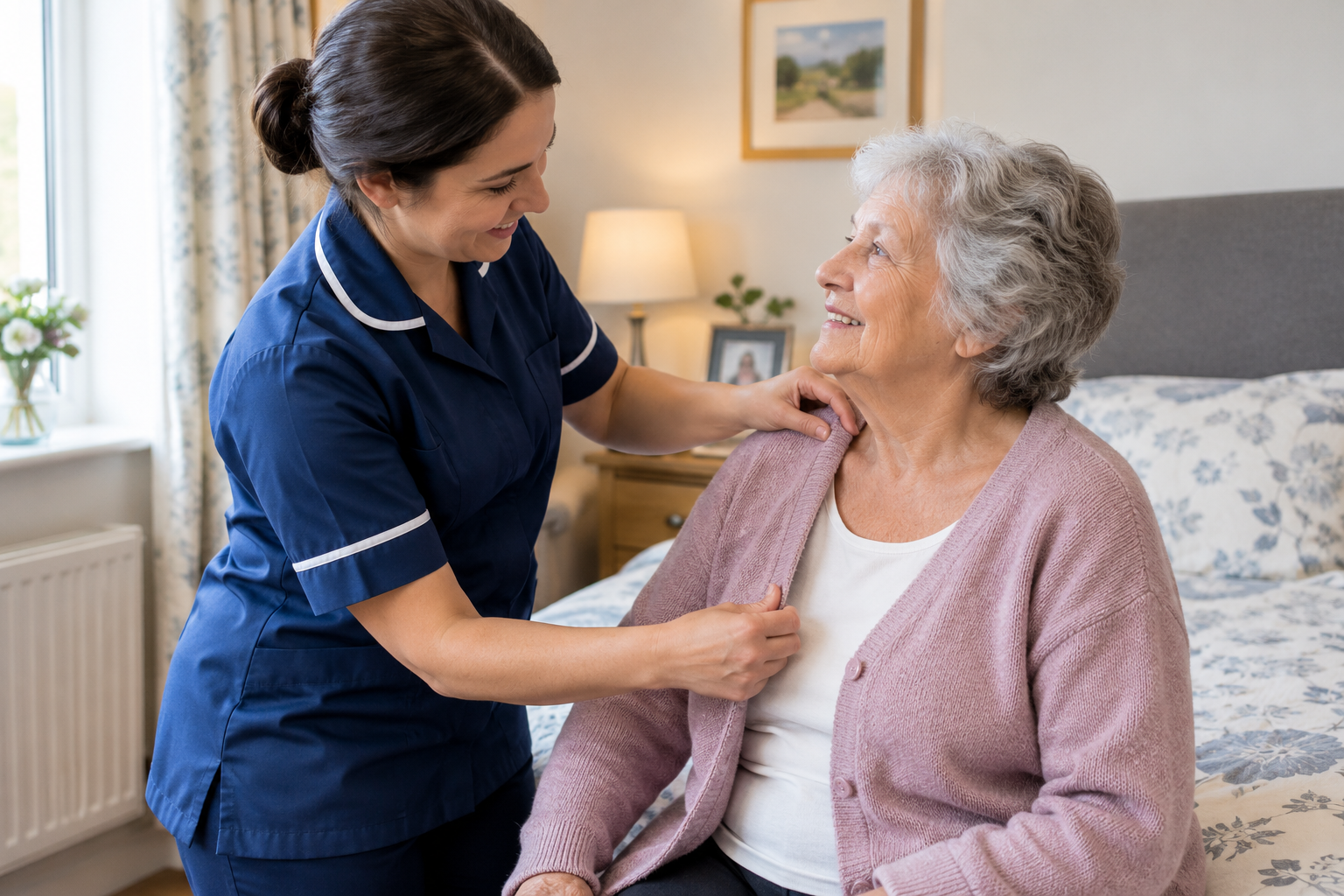
Washing and dressing assistance does not stop at the bathroom door. Dressing and undressing assistance covers choosing clothes, laying them out in order, fastening buttons and zips, and putting on socks and shoes. Front fastening tops and elastic waists can make dressing easier. Personal care assistance at dressing time works best when the carer offers choices, such as which cardigan to wear, rather than deciding for the person.
[IMAGE 3: see Image Planning below]
Grooming, Hair Care and Oral Hygiene
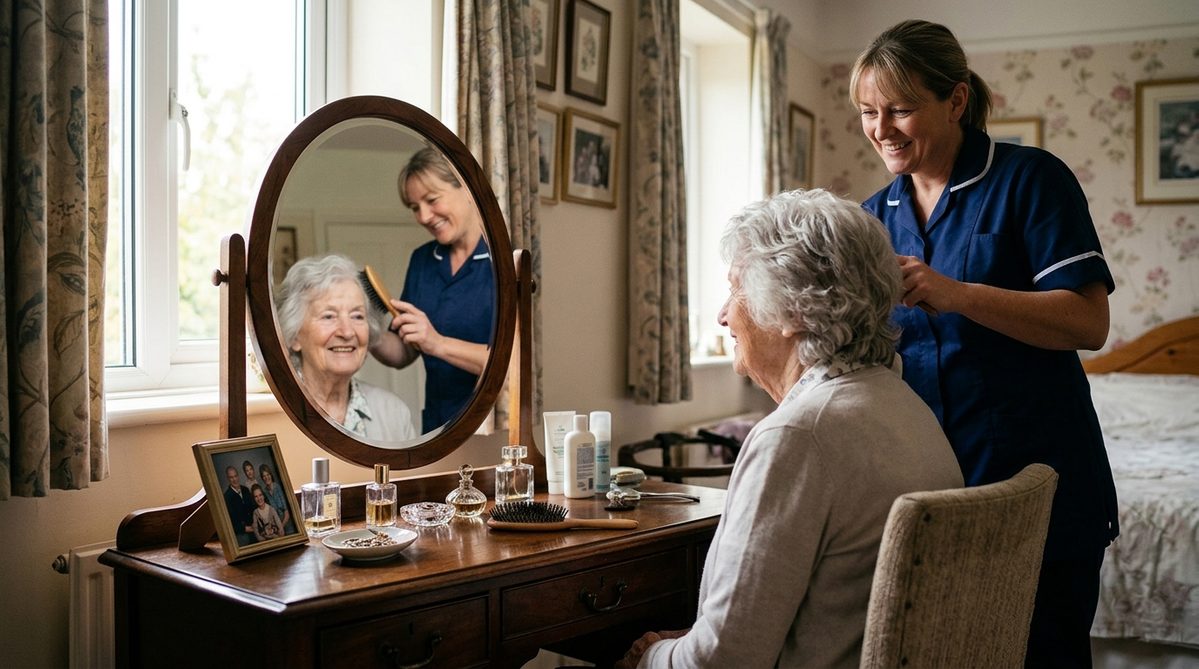
Grooming assistance covers shaving, nail care, skin care and getting ready for the day the way the person likes. Hair care for older adults, including brushing, washing and styling, often does more for confidence than almost anything else. Oral hygiene support means helping with teeth or dentures and noticing sore gums or changes in eating. Together these small acts support maintaining personal hygiene, which affects comfort, health and self esteem. Personal hygiene assistance done kindly feels like being looked after, not being processed.
Toileting and Continence Support
Toileting and continence support is among the most sensitive parts of daily personal care. A respectful approach means closed doors, a calm manner, quiet and clear communication and no rush. Personal care assistance in this area should never leave the person embarrassed. If continence needs change suddenly, speak to the GP or a nurse, because there may be a treatable cause.
Support with Daily Living Beyond the Bathroom
Daily personal care often sits alongside help with daily living activities, such as getting up and going to bed, preparing for the day and keeping the home tidy. Support with daily living varies between providers, so ask exactly which tasks are included in the plan. BC CARE LTD provides domiciliary care, which it describes as personalised care and support that helps people live independently at home.
How Personal Care Assistance Works at Home
Personal care at home follows a simple process:
- Conversation and assessment. The provider learns about health, routines, preferences and the home, and the council can also carry out its own needs assessment.
- Individual care plans. A written plan sets out the tasks, visit times and any risks. Person centred care means it starts with the individual, including how they like to wash and dress.
- Matching carers. Many providers try to introduce a small, regular team.
- Regular visits. Carers follow the plan and record what they do.
- Reviews. The plan is updated after illness, a fall or a change in needs.
BC CARE LTD provides consultation and coordination, covering care planning, assessments and coordination of services across providers. Compassionate care shows in how carers speak and listen as much as in what they do. Personal care assistance works best when the same carers visit regularly, because trust makes intimate tasks easier.
Personal Care Assistance Compared With Other Support
Families often weigh several options at once. The table below compares them in general terms. Details vary by provider and person.
| Feature | Personal care at home | Residential care home | Family and friends | Nursing care at home |
| Who helps | Trained carers who visit | Care home staff | Relatives or friends | Registered nurses |
| Typical tasks | Washing, dressing, grooming, toileting, daily routines | Personal care plus accommodation and meals | Whatever relatives can manage | Clinical tasks such as wound care or injections |
| Where it happens | The person’s own home | In the care home | Usually the person’s home | Usually the person’s home |
| Best suited to | People who want to stay at home and need help with personal tasks | People whose needs cannot be met safely at home | Light needs, or alongside paid care | Medical needs that require a nurse |
| Keeps existing routine | Yes | No, after a move | Yes | Yes |
The key difference is who provides the help and where. Personal care assistance is non clinical support for everyday tasks, delivered at home. Nursing care covers medical tasks. A care home provides personal care but means moving. Family help is precious but hard to sustain as needs grow, so many people combine more than one.
Why Trained Professional Carers Matter
Trained professional carers bring skills families may not have, including safe moving and handling, hygiene practice, dementia awareness and the confidence to handle awkward moments calmly. They also notice changes such as new bruises, sore skin, weight loss or low mood, and they report them. Respectful personal care is a skill, and personal care assistance delivered by someone who knows the person is very different from help from a different stranger each day.
How to Choose a Provider
Use this checklist when comparing providers:
- Check Care Quality Commission registration and the latest inspection report. Ask every provider, BC CARE LTD included, for its registration details.
- Ask what training carers receive, who supervises them and what background checks are carried out.
- Ask how many different carers are likely to visit, and who covers holidays and sickness.
- Ask whether you can request a carer of a particular gender and how preferences are recorded.
- Ask for a written plan and an example with details removed.
- Ask how complaints are handled and how often plans are reviewed.
- Ask how personal care assistance is recorded and how families are kept informed.
Personal Care Assistance in Leeds with BC CARE LTD
BC CARE LTD is based at Unit 2.1, Oaktree House, 408 Oakwood Lane, Leeds LS8 3LG. Families looking for personal care services in Leeds can ask about the following, all listed on its website:
- Personal care.
- Domiciliary care: personalised care and support that helps people live independently at home.
- Specialised care for dementia, mental health and complex medical conditions.
- Consultation and coordination: care planning, assessments and coordination of services across providers.
- Rehabilitation services: physical, occupational and speech therapy aimed at helping people recover and regain independence.
- Supported living and care homes.
If you are comparing personal care assistance options in Leeds, a conversation with the team is a practical place to start. Call 0113 824 1978 or email contact@bc-care-ltd.co.uk to ask what a plan could include.
Costs and Funding
You can arrange personal care assistance privately, and many families do. Costs vary by provider, visit length and time of day, so ask for a written quote. Under the Care Act 2014, councils must assess adults who appear to need care, whatever their finances, and Leeds City Council handles this for Leeds residents. Attendance Allowance is for people over State Pension age with care needs and is not means tested. Check GOV.UK for current rules.
Common Mistakes to Avoid
- Waiting until personal care assistance becomes urgent, after a fall or a hospital stay.
- Choosing on price alone, which may mean shorter visits or less experienced staff.
- Not discussing preferences such as shower days, bath or shower, or carer gender.
- Relying on verbal agreements instead of a written plan.
- Leaving the person receiving care out of decisions.
- Forgetting to review the plan as needs change.
Frequently Asked Questions
What is personal care assistance?
It is help with private daily tasks such as washing, dressing, grooming, oral care and toileting, given by a trained carer in a respectful way that keeps the person in control.
Is personal care the same as nursing care?
No. Personal care covers everyday hygiene and dressing, while nursing care covers clinical tasks such as wound care. Ask providers exactly what they offer.
How often can someone have help with washing and dressing?
It depends on the plan. Some people have one short visit a day, others have several. Visits can usually be adjusted as needs change.
Can I ask for a carer of a particular gender?
Many providers try to accommodate preferences, but practice varies. Raise it at the start so it is written into the plan.
Does BC CARE LTD provide personal care?
Yes. BC CARE LTD lists personal care and domiciliary care among its services. Contact the team to ask what a plan could include.
What if the person refuses help with washing?
Stay calm and ask why. Pain, fear, cold or embarrassment are common reasons. A carer can try a different time, a different approach or a strip wash, and the plan can be adjusted.
Conclusion
Personal care assistance should leave someone feeling clean, comfortable and respected, with as much control as possible. The best arrangements are personal, consistent and reviewed regularly, so they change when needs change.
If you are exploring options for yourself or a relative in Leeds, call BC CARE LTD on 0113 824 1978 or email contact@bc-care-ltd.co.uk to arrange a conversation.


