



Maintaining Dignity During Personal Care A Practical Guide for Families and Carers
Maintaining dignity during personal care comes down to three habits: asking before acting, protecting privacy and letting the person do what they can for themselves. Washing, dressing and toileting are among the most private parts of life, so how help is given matters as much as the help itself.
This guide explains what maintaining dignity during personal care looks like in practice, with steps for carers and families, a comparison of respectful and rushed approaches and questions to ask providers. It is written for families in Leeds and Bradford, and it explains which services BC CARE LTD provides, based on its website.
What Does Maintaining Dignity During Personal Care Mean?
Dignity in personal care means being treated as a person, not a task. It is not a soft extra. The Care Quality Commission’s fundamental standards include dignity and respect, and the Care Act 2014 counts personal dignity, including treatment with respect, as part of wellbeing. Dignity in elderly care therefore sits at the centre of quality.
In practice, maintaining dignity during personal care rests on a handful of principles:
- Respect and independence: supporting people to do what they can rather than doing it for them.
- Privacy and confidentiality: protecting the person’s body and personal information.
- Choice and control in care: letting the person decide how, when and by whom help is given.
- Informed consent: explaining what will happen and asking permission.
- Comfort and safety: keeping the person warm, steady and unhurried.
Personal care for older adults covers washing and dressing support, personal hygiene assistance, grooming and toileting. BC CARE LTD provides personal care as one of its services.
Practical Steps for Carers and Families
Ask First and Seek Informed Consent
Adults are presumed able to make their own decisions unless shown otherwise, so consent should be sought for every task, even when the answer is usually yes. Say what you are about to do, ask whether it is all right and accept a no calmly. Informed consent is part of maintaining dignity during personal care. Where someone cannot consent, carers follow the care plan and the Mental Capacity Act 2005, which centres on acting in the person’s best interests.
Protect Privacy
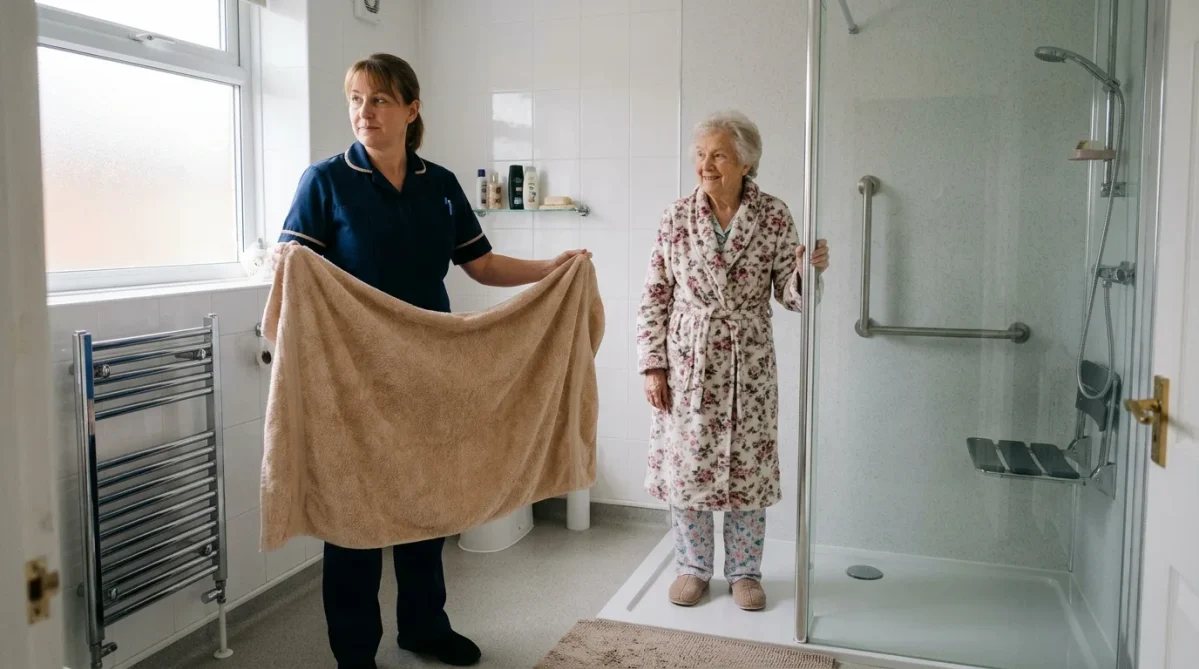
Maintaining privacy during personal care is simple but easy to forget. Close doors and curtains, knock before entering, cover the person with a towel and expose only the part being washed. Keep conversations about the person private and share information only with those who need it. Privacy and confidentiality apply to written records too.
Offer Choice and Control
Offer choices wherever possible: bath or shower, morning or evening, which clothes to wear, which products to use. Let the person hold the flannel, wash their face or fasten a button. This supports independence in daily living and helps with maintaining personal independence for longer. Personal care at home Leeds families arrange works best when the routine belongs to the person.
Use Respectful Communication
Use the name the person prefers, speak at eye level and describe each step before it happens. Avoid baby talk and avoid talking about the person as if they were not there. Respectful communication also means noticing body language, because a wince or a turned head may say what words cannot. Personal boundaries matter too: carers should be warm without becoming over familiar.
Build Trust With Carers
Intimate tasks are easier with someone you know. Building trust with carers takes consistency, so ask how many different carers are likely to visit and who covers leave. Compassionate care at home shows in patience and time, not just technique. Maintaining dignity during personal care becomes far easier once trust exists.
Respect Culture and Faith
Cultural sensitivity matters. Some people have strong preferences about modesty, the gender of the carer, washing practices, clothing or prayer times. Ask rather than assume, and record the answers in the plan. Preferences differ within every community, so never stereotype.
Protect Comfort and Safety
A warm room, warm towels, non slip mats and well placed rails make washing safer and less distressing. Safety must never cost dignity, though. Keep the person covered during transfers and use equipment as trained.
Preserving Self Esteem and Emotional Wellbeing
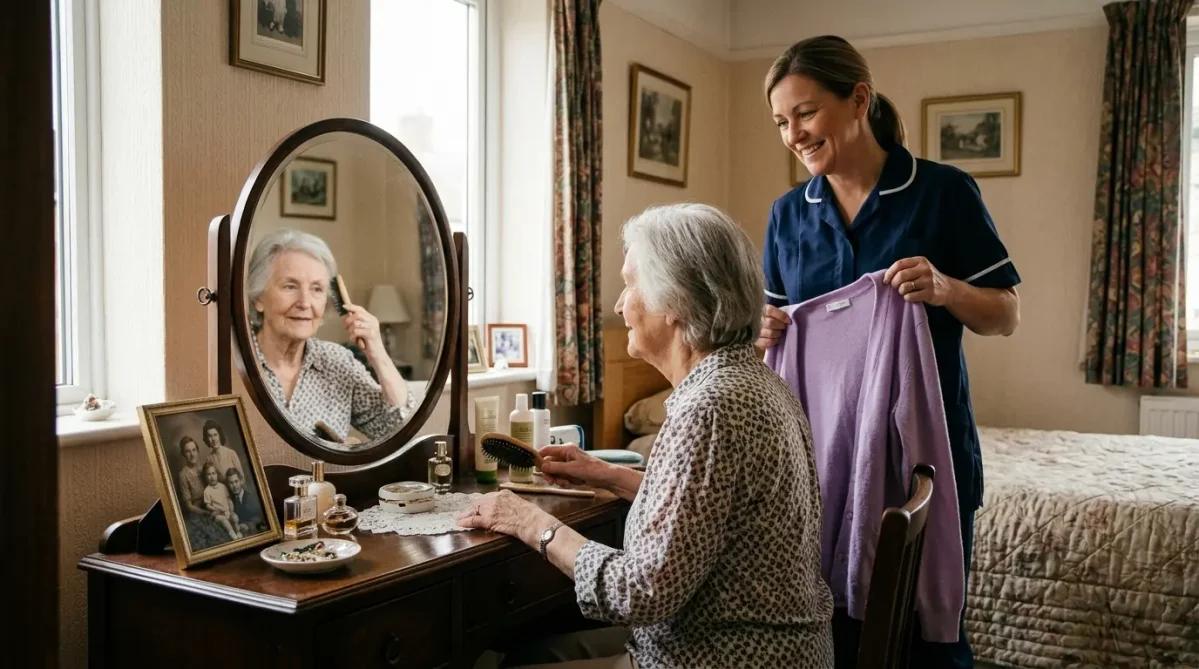
Personal care can leave people feeling embarrassed or ashamed, particularly after a stroke, a fall or the onset of dementia. Emotional wellbeing depends on how those moments are handled. Preserving self esteem means responding calmly to accidents, never showing disgust or impatience and helping the person look and feel like themselves, with hair brushed and clothes of their choosing.
If someone refuses help, stay calm and ask why. Pain, cold, fear and embarrassment are common reasons. Maintaining dignity during personal care sometimes means pausing and trying again later.
Respectful and Rushed Approaches Compared
The table shows how the two approaches differ in common situations.
| Situation | Respectful approach | Approach to avoid |
| Starting a wash | Explain the plan, ask permission and wait for agreement | Starting without warning |
| Privacy | Close doors and curtains, cover with towels, expose only what is needed | Leaving the person uncovered or the door open |
| Choices | Offer options on timing, clothes and products | Deciding everything for the person |
| Independence | Let the person do what they can, with support | Taking over to save time |
| Speaking | Use the preferred name, eye contact and a calm tone | Baby talk or talking over the person |
| Accidents | Respond calmly, reassure and clean up discreetly | Showing impatience or disgust |
| Information | Share only with those who need it | Discussing the person in front of others |
The key difference is attitude. Rushed care treats personal care as a task to complete, while respectful care treats it as time with a person. The respectful approach often takes only a minute or two longer. Maintaining dignity during personal care is therefore mostly a matter of habit and training, not extra equipment.
Person Centred Care Planning
Person centred personal care starts with a written plan. Person centred care planning records individual care needs and preferences: preferred time and method of washing, bath or shower, products, any preference about the carer’s gender, cultural or religious needs, what the person can do alone and what upsets them. Review the plan after illness, a fall or a change in memory, and involve the person and their family.
BC CARE LTD provides consultation and coordination, covering care planning, assessments and coordination of services across providers. A good plan is the foundation for maintaining dignity during personal care every day, not just on a good day.
Maintaining Dignity During Personal Care in Leeds and Bradford
BC CARE LTD is based at Unit 2.1, Oaktree House, 408 Oakwood Lane, Leeds LS8 3LG, with a Bradford location at Suite 28, 62 Tong Street, BD4 9LX. Families looking for personal care services Bradford or personal hygiene support Leeds can ask about the following, all listed on its website:
- Personal care.
- Domiciliary care: personalised care and support that helps people live independently at home.
- Specialised care for dementia, mental health and complex medical conditions.
- Consultation and coordination: care planning, assessments and coordination of services across providers.
- Rehabilitation services: physical, occupational and speech therapy aimed at helping people recover and regain independence.
- Supported living and care homes.
When you ask about respectful personal care services, ask how the provider handles consent, privacy and preferences, and ask to see an example plan with details removed. Elderly personal care Bradford families need, and the respectful care at home Bradford households expect, should be explained in plain terms. Maintaining dignity during personal care should be something a provider can describe, not just promise.
Dignity in Care in Manchester
Families in Manchester can ask the same questions. Dignity in care Manchester providers offer should be explained in the same way. Anyone looking for personal care assistance Manchester or personal care services Manchester should check that the provider covers their postcode and is registered with the CQC. Manchester City Council can arrange a care needs assessment. BC CARE LTD lists locations in Leeds and Bradford, so confirm coverage before assuming it extends elsewhere.
How to Choose Professional Personal Care Services
Whether you are comparing personal care services UK wide or elderly care services England providers, the same checks apply:
- Check CQC registration. Providers of personal care in England must be registered. Read the latest inspection report, and ask every provider, BC CARE LTD included, for its registration details.
- Ask how dignity is built into each visit. Ask how maintaining dignity during personal care shows up in consent, privacy and routines.
- Ask about training, supervision and background checks for professional carers.
- Ask about continuity, including who covers holidays and sickness.
- Ask for a personalised plan and how often it is reviewed.
- Read reviews and ask for references.
- Ask how complaints are handled.
Professional personal care services should welcome these questions. Personal care for the elderly UK families arrange, and personal care support England wide, works best when providers explain themselves openly. A strong provider treats maintaining dignity during personal care as a standard, not an option.
Common Mistakes to Avoid
- Treating maintaining dignity during personal care as a bonus rather than the baseline.
- Rushing, which turns care into a task.
- Skipping consent because the person agreed yesterday.
- Not recording preferences in the care plan.
- Assuming cultural or religious preferences instead of asking.
- Leaving the person out of decisions about their own care.
- Waiting for a crisis before arranging support.
Frequently Asked Questions
What does maintaining dignity during personal care mean?
It means treating the person with respect during intimate tasks: asking consent, protecting privacy, offering choices and supporting independence.
How can carers protect privacy during personal care?
Close doors and curtains, knock, use towels to cover the person, expose only what is needed and keep personal information confidential.
What if someone refuses help with washing?
Stay calm and ask why. Pain, cold, fear and embarrassment are common reasons. Try a different time, a different method or a smaller step, and update the plan.
Can I ask for a carer of a particular gender?
Many providers try to meet this preference, but practice varies. Raise it at the start so it is written into the plan.
How do carers protect dignity for someone with dementia?
They use calm communication, familiar routines and simple choices. Maintaining dignity during personal care matters even more with dementia, because confusion can make intimate tasks frightening. BC CARE LTD provides specialised care that includes dementia care.
Does BC CARE LTD provide personal care?
Yes. BC CARE LTD lists personal care and domiciliary care among its services. Contact the team to ask what a plan could include.
How can families help with maintaining dignity during personal care?
Share the person’s preferences and routines, ask providers how consent and privacy are handled, and review the plan together regularly.
Conclusion
Maintaining dignity during personal care is built from small, repeated acts: asking, explaining, covering, waiting and listening. The best care is personal, consistent and reviewed, and it leaves the person feeling respected and in control.
To talk through maintaining dignity during personal care with BC CARE LTD in Leeds or Bradford, call 0113 824 1978 or email contact@bc-care-ltd.co.uk.


