
Emergency Home Care for Elderly Relatives: How to Arrange It Quickly
If the situation is urgent but safe, such as a sudden hospital discharge, a fall at home or a main carer falling ill, emergency home care for elderly relatives can sometimes be arranged at short notice, depending on what is needed and which providers have availability. The key is to know who to call, what to ask and what to have ready.
This guide explains how to arrange emergency home care for elderly relatives step by step. It is written for families in Leeds and Bradford, and it explains what BC CARE LTD provides, based on its website.
When Do You Need Emergency Home Care for Elderly Relatives?
Common triggers include:
- A hospital discharge that comes sooner than expected.
- A fall or illness at home that leaves someone needing temporary help.
- A family carer who becomes ill, is bereaved or is suddenly unavailable.
- An existing care arrangement ending, for example when a carer leaves or a provider stops.
- A relative who was coping but is no longer safe alone, perhaps after a change in memory.
Some of these start with health services, so emergency care for older people from the NHS comes first and home care follows. Others are practical problems that need cover quickly, which is where emergency care at home fits. Emergency home care Near me for elderly relatives is usually short term at first and then reviewed.
What Is Emergency Domiciliary Care?
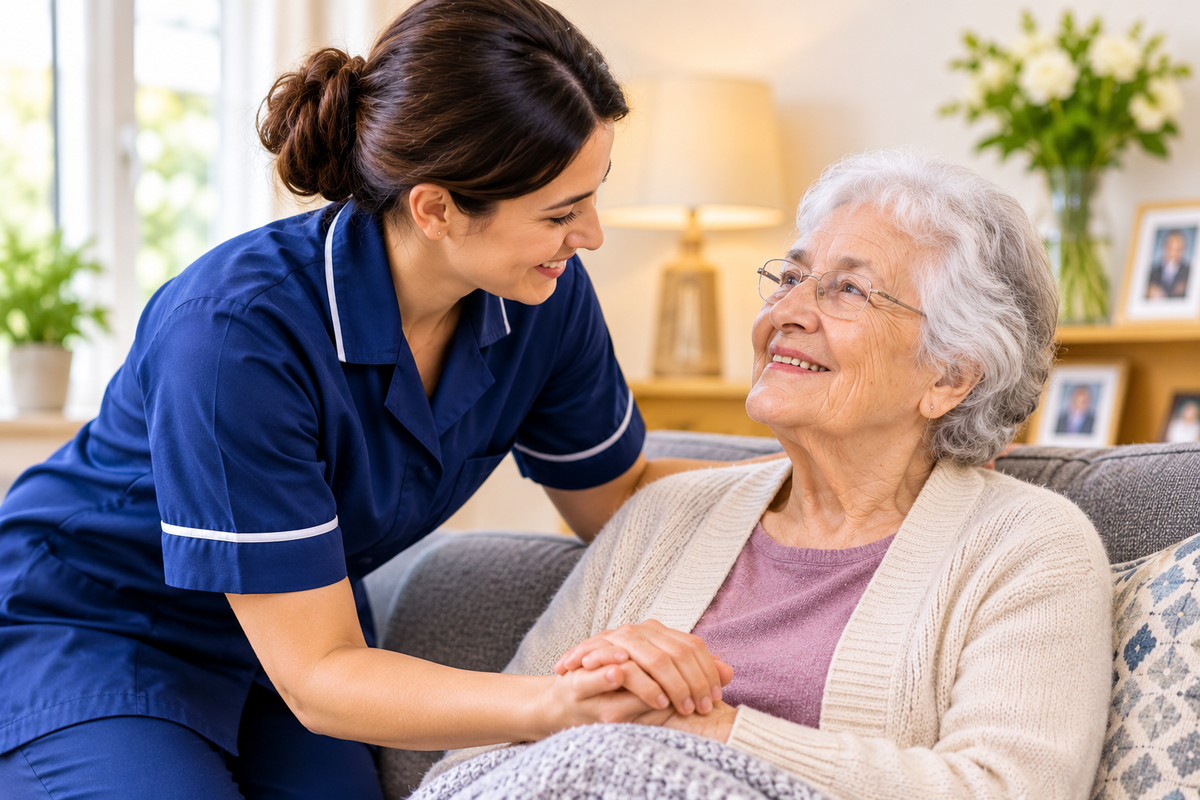
Emergency domiciliary care is home care that starts at short notice. Professional carers visit to help with personal care assistance, medication support, meals, daily living assistance, companionship care and welfare checks. This kind of elderly care support is delivered in the person’s own home, so they can stay in familiar surroundings.
Providers use different phrases, including emergency home care services, urgent home care for elderly people, short notice home care, last minute home care services, immediate home care assistance and urgent care at home for older adults. There is no single legal definition, so when you ask about emergency home care for elderly relatives, check what the provider means and how quickly it can actually start. Immediate care assistance of this kind is not guaranteed anywhere, because it depends on staff availability.
How to Arrange Emergency Home Care for Elderly Relatives Step by Step
Step 1: Make the Situation Safe
Check the person is safe tonight: warm, fed, able to reach a phone and with medicines to hand. If possible, ask a neighbour or relative to stay or call in. If there is a medical concern, contact the GP, NHS 111 or 999 as appropriate.
Step 2: Write Down What Is Needed
List the tasks that cannot wait: getting up and to bed, washing, toileting, meals, medication and night time needs. Note the times of day, who can help in between and any risks such as falls or confusion. This one page list is the basis for your urgent care arrangements, and it speeds up every phone call.
Step 3: Contact the Hospital or the Council
If the person is in hospital, speak to the ward’s discharge team early. Ask what hospital discharge support is available and whether short term help can be arranged. If they are at home, contact Leeds City Council adult social care and say it is urgent. Under the Care Act 2014, councils must assess adults who appear to need care, and in some cases they can arrange urgent help before an assessment is complete. A home care assessment from a provider will usually follow. Council support depends on assessed needs and a financial assessment, so many families arrange emergency home care for elderly relatives privately while the council process continues.
Step 4: Call Several Providers
Contact two or three registered providers of emergency home care for elderly relatives on the same day. Ask each one:
- Can you start in the next few days, or sooner, and what does that depend on?
- What is your shortest visit, and can you cover evenings, weekends or nights?
- Is 24 hour home care for elderly clients available if the need grows?
- How do you set up a personalised care plan at short notice?
- Who will visit, and how will I be told if that changes?
Step 5: Agree a Short, Clear Plan
Ask for a written personalised care plan, even a brief one. It should cover tasks, visit times, medication support, risks, contacts and a review date. Person centred care means the plan starts with the person’s routines and preferences, even in a crisis. Ask about notice periods and charges before you agree.
Step 6: Review Within the First Days
Emergency arrangements are a starting point. Ask for a review in the first week or two, so visits can be increased, reduced or turned into a longer term plan. Once the crisis passes, maintaining independence is a sensible aim.
What to Have Ready When You Call
Providers can move faster when you have the basics to hand:
- Full name, address and how to get into the home, such as a key safe code.
- GP and pharmacy details, and a current medication list.
- Health conditions, allergies and mobility needs, including equipment in the home.
- Emergency contacts and anyone with power of attorney.
- Preferences, such as the gender of the carer, language or religious needs.
- Pets, and any hazards in the home.
- The reason for urgency, so the provider understands the timescale.
Emergency Options Compared
The table compares the main ways of covering an urgent situation. Details vary by provider and person.
| Option | What it provides | Best suited to | Key point |
| Emergency visiting care | Carers visit at agreed times for hands on help | Needs that can be met in visits | Check the earliest start and minimum visit length |
| 24 hour or live in care | Continuous presence in the home | High needs, or support day and night | Needs a suitable space for the carer, and suits fewer people |
| Respite care in a care home | A short stay with staff on site | Family carers needing a break, or needs too high for visits | Involves leaving home, so check availability |
| Family and friends | Whatever relatives can manage | Short gaps, or alongside paid care | Hard to sustain if the situation continues |
| Council urgent support | Help arranged by the council after contact | People who meet the criteria after assessment | Depends on assessment and a financial check |
The key difference is how much support is available, how quickly and for how long. Visiting care suits people who are safe between visits. Live in or 24 hour care suits those who are not. Respite care in a care home suits people whose needs cannot be met safely at home for now. Choosing the right emergency home care for elderly relatives means matching the option to the risks you wrote down in step two.
Respite Care and Family Caregiver Support
Emergency home care for elderly relatives often follows the illness or exhaustion of a family carer. Respite care gives them a break, and it can be arranged at home or in a care home, depending on the provider. Family caregiver support includes the council’s carer’s assessment, which carers have a right to ask for, and independent advice from charities such as Carers UK and Age UK. Ask providers whether respite at home is available and how quickly it can start.
Paying for Emergency Care
Paying for emergency home care for elderly relatives depends on circumstances. Many families pay privately because it can start sooner. Others receive council funding after a needs assessment and financial assessment, and some people qualify for NHS Continuing Healthcare, which is not means tested. Attendance Allowance is for people over State Pension age with care needs and is also not means tested. Check GOV.UK for current rules, and ask providers for a written quote that includes any short notice charges, minimum visit lengths and cancellation terms.
What to Ask Before You Agree
- Is the provider registered with the CQC? Read the latest inspection report, and ask every provider, BC CARE LTD included, for its registration details.
- Can the provider start emergency home care for elderly relatives when you need it, not just sometime this week?
- How are professional carers recruited, trained and supervised?
- How will you be told about visits, changes and concerns?
- What happens if a carer is late or unwell?
- How are complaints handled?
Emergency Home Care for Elderly Relatives in Leeds and Bradford With BC CARE LTD
BC CARE LTD is based at Unit 2.1, Oaktree House, 408 Oakwood Lane, Leeds LS8 3LG, with a Bradford location at Suite 28, 62 Tong Street, BD4 9LX. Its website lists:
- Domiciliary care: personalised care and support that helps people live independently at home.
- Personal care.
- Specialised care for dementia, mental health and complex medical needs.
- Consultation and coordination: care planning, assessments and coordination of services across providers.
- Rehabilitation services: physical, occupational and speech therapy aimed at helping people recover and regain independence.
- Supported living and care homes.
The website does not state emergency, short notice or 24 hour home care availability, so ask the team directly whether it offers emergency home care for elderly relatives, how quickly it could start and what it would need from you. Call 0113 824 1978 or email contact@bc-care-ltd.co.uk.
Common Mistakes to Avoid
- Waiting too long to arrange emergency home care for elderly relatives, then facing a rushed discharge.
- Assuming every provider of emergency home care for elderly relatives can start the same day.
- Agreeing to care with no written plan or review date.
- Not asking about minimum visit lengths, charges or cancellation terms.
- Leaving the older person out of decisions.
- Forgetting the family carer, who may need support too.
Frequently Asked Questions
How quickly can emergency home care for elderly relatives start?
It depends on the provider, the time of day and what is needed. Some can start at short notice and others cannot, so ask each one for the earliest realistic start.
Who pays for emergency home care for elderly relatives?
Many families pay privately. The council may pay after a needs and financial assessment, and the NHS may fund care in some cases of complex health need.
Can carers help with hospital discharge?
Many providers support people coming home from hospital. Speak to the ward’s discharge team early, and ask what hospital discharge support is available.
Can emergency care become longer term?
Yes. Emergency arrangements are reviewed, and a short term package can become a longer plan or be reduced as the person recovers.
Does emergency care include nursing?
Usually not. Home care focuses on personal care and practical support. Ask any provider what clinical support, if any, it offers.
Does BC CARE LTD provide emergency home care?
BC CARE LTD lists personalised domiciliary care and personal care among its services. Its website does not state emergency availability, so contact the team to ask.
Conclusion
Arranging emergency home care for elderly relatives is easier with a plan: make the person safe, write down what is needed, contact the hospital or council, call several providers and agree a clear written plan. Ask for a review within days, because emergency arrangements are only a start.
To discuss emergency home care for elderly relatives in Leeds or Bradford, call BC CARE LTD on 0113 824 1978 or email contact@bc-care-ltd.co.uk.