


What Is Domiciliary Care? A Guide for Families in Bradford
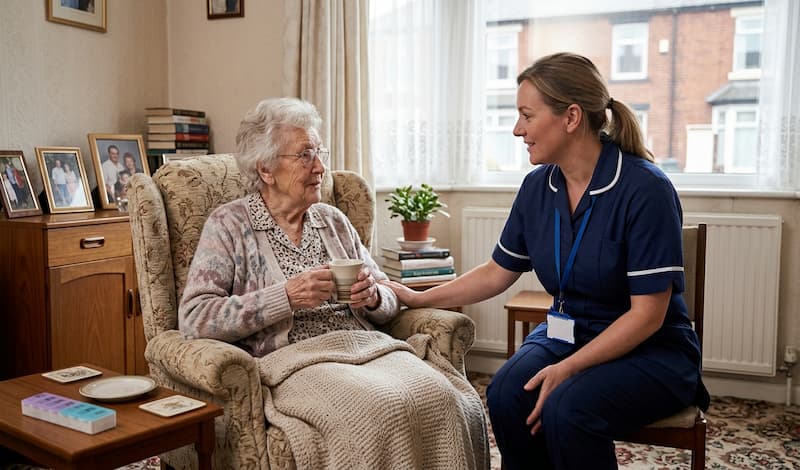
Domiciliary care is professional support delivered in your own home, so you can carry on living there safely and comfortably. Trained carers visit at agreed times to help with things like washing, dressing and everyday tasks, and the support is shaped around you rather than fixed in advance.
For many families, domiciliary care in Bradford is the first step towards getting help without moving into a care home. This guide explains what it involves, who it suits, how it compares with other options, how it is paid for and what to ask before choosing a provider. Where it is relevant, it also explains what BC CARE LTD provides in Bradford.
What Is Domiciliary Care?
Domiciliary care, often called home care or care at home, is regulated support provided in a person’s own residence. The word “domiciliary” simply refers to the home. The carer comes to you, rather than you moving to a care setting.
It is not one fixed service. It might be a short morning visit to help someone get up and dressed, or several visits spread across the day. The amount of help is agreed at the start and can change as needs change. BC CARE LTD provides personalised domiciliary care and support that helps people live independently at home.
In England, providers of personal care must be registered with the Care Quality Commission (CQC), which publishes inspection reports on its website. Checking any provider’s registration and latest report is a sensible first step.
What Does Domiciliary Care Include?
Home care services vary between providers, but most cover the following areas.
Personal Care
Personal care covers the most private tasks of the day: washing, bathing, dressing, toileting and continence support. Done well, it is delivered discreetly and with respect for the person’s dignity and preferences. Personal care is one of the services BC CARE LTD provides.
Daily Living Support
Daily living support covers the practical tasks that keep a household running. This can include preparing meals, making sure the person is eating and drinking, prompting medication at the right times and getting about safely indoors. The aim is to help people do what they can for themselves rather than doing everything for them. Ask any provider exactly which tasks are included.
Companionship
Loneliness affects many people who live alone. Companionship might mean conversation over a cup of tea, a walk or help getting to an appointment or social activity. It is often the part of a visit that people value most, so check whether it can be built into the care plan.
Specialist Support
Some people need support for dementia, mental health needs or complex medical conditions. Carers should have suitable training for these needs, and the care plan should explain how they will be met. BC CARE LTD offers specialised care for dementia, mental health and complex medical needs.
Who Can Benefit from Domiciliary Care in Bradford?
Elderly care is the most common reason families look into home care, but domiciliary care supports a wider group, including:
- Older adults who want independent living at home but find some tasks harder than before.
- People coming home from hospital who need help while they recover.
- Adults living with dementia, a long term health condition or reduced mobility.
- Adults with a physical or learning disability.
- People who live alone and would benefit from regular, friendly contact.
Take a woman in her eighties who manages most of her day but finds showering unsafe and often skips lunch. Two or three short visits a day might be enough to keep her safe and healthy while preserving the routines she cares about.
For people whose main goal is regaining strength and confidence after illness or injury, rehabilitation can sit alongside everyday support. BC CARE LTD provides rehabilitation services aimed at supporting recovery, mobility and independence.
How Domiciliary Care Works in Practice
Knowing the process helps families feel more in control.
- First conversation. You contact a provider, or the council, to describe what help is needed.
- Assessment. Someone from the provider usually visits to learn about health, routines, preferences, home safety and family involvement. The council can also carry out its own care needs assessment, separate from any private arrangement.
- Care plan. A written plan sets out the tasks, visit times, visit length and any risks. It should be agreed with the person receiving care and, where appropriate, their family.
- Matching carers. Many providers try to introduce a small, regular team so the person gets to know their carers.
- Settling in. The first few weeks are often a trial period, and honest feedback should be welcomed.
- Regular reviews. Needs change, particularly after an illness, a fall or a change in memory, so the plan should be reviewed and updated.
The early steps of assessment and planning are where good care is won or lost. BC CARE LTD provides consultation and coordination, covering care planning, assessments and coordination, which is designed to create a smooth care journey from the start.
Domiciliary Care Compared With Other Options
Families often weigh up several kinds of support at once. The table below compares the main options in general terms. Details and costs vary by provider and individual, so always ask for written information.
| Feature | Domiciliary care | Supported living | Residential care home | Family care only |
| Where support happens | In the person’s own home | In the person’s own tenancy, with support provided | In a care home | In the home, by relatives |
| How support is delivered | Scheduled home care visits | Support arranged around the person’s needs | Staff on site day and night | Depends on relatives’ availability |
| Typically suits | People who want to stay in their own home and need help at set times | Adults who want to live independently with tailored support | People whose needs cannot be safely met at home | Low needs, or as a supplement to paid care |
| Flexibility | Visits can usually be increased or reduced | Support is reviewed as needs change | Less flexible, as a move is involved | Flexible, but can strain family life |
| Keeps existing home and routine | Yes | Yes, in a supported setting | No | Yes |
The key difference is where you live and how much support is built in. Domiciliary care keeps you in the home you know, with carers visiting for the tasks you need help with. A care home provides round the clock staffing, but it means leaving familiar surroundings. Supported living sits between the two, with support tailored to adults who want more independence. Family care only can work well for lighter needs, but it is hard to sustain if needs grow.
BC CARE LTD provides three of these routes: domiciliary care, supported living and care homes. That can be helpful if needs change over time and you would prefer to keep talking to one organisation.
Paying for Home Care in Bradford
Costs depend on the provider, the number and length of visits, the time of day and any specialist needs. Because prices differ, ask for a clear written quote rather than relying on online averages.
Funding can come from several places:
- Council funded care. After a needs assessment and a financial assessment, some people receive help from their local authority. In Bradford this starts with City of Bradford Metropolitan District Council adult social care.
- Private home care. Many families pay directly, which gives more choice over provider and visit times.
- NHS Continuing Healthcare. For people with complex, ongoing health needs, the NHS may fund care. Eligibility is assessed individually.
- Attendance Allowance. This benefit is for people over State Pension age who need help with personal care. It is not means tested, and you can check current rules on GOV.UK.
An independent adviser or a charity such as Age UK can help you understand what you may be entitled to.
How to Choose Professional Carers
Use this checklist when comparing providers:
- Check the provider’s CQC registration and latest inspection report.
- Ask how carers are recruited, checked, trained and supervised.
- Ask what training they have in dementia, moving and handling and medication.
- Find out whether you will have a regular carer or small team.
- Ask how visits are recorded and how families are kept informed.
- Ask what happens if a carer is late or unavailable.
- Read the contract carefully, including notice periods and charges.
- Ask how complaints are handled.
Speaking to other families or asking for references can give you a clearer picture of everyday quality.
Common Mistakes to Avoid
- Waiting for a crisis. Starting support early gives the person time to get used to their carers.
- Choosing on price alone. The lowest quote may reflect shorter visits or less experienced staff.
- Leaving out the person receiving care. Their wishes should shape the care plan.
- Relying on verbal agreements. Insist on a written plan and written terms.
- Skipping reviews. A plan that suited someone six months ago may not suit them now.
- Ignoring the home itself. Simple changes such as grab rails and better lighting can make visits safer.
Domiciliary Care With BC CARE LTD
BC CARE LTD has a location in Bradford at Suite 28, 62 Tong Street, BD4 9LX, and also serves Leeds. Its services include personalised domiciliary care, personal care, specialised care, consultation and coordination, rehabilitation services, supported living and care homes.
If you are not sure which type of support is right, talking it through with the team is a practical place to start. You can call 0113 824 1978 or email contact@bc-care-ltd.co.uk to ask about domiciliary care in Bradford and what an assessment would involve.
Frequently Asked Questions
What is the difference between domiciliary care and home care?
In everyday use they mean the same thing. Domiciliary care is the more formal term used in regulation and by councils, while home care is what most families search for.
Does domiciliary care include nursing?
Usually not. It focuses on personal care and practical support. Nursing care is delivered by registered nurses, sometimes through NHS community nursing. Ask any provider exactly what clinical support, if any, they offer.
How long is a typical home care visit?
It depends on the tasks involved and what the provider offers. Make sure the planned time is realistic for the person’s needs, and ask what happens if a visit needs to run longer.
Can I arrange private home care without the council?
Yes. Many people arrange care directly with a provider and pay for it themselves. You can still ask the council for a needs assessment at any time.
Can domiciliary care support someone with dementia?
Yes. Carers with suitable training can offer routine, reassurance and safe support at home. BC CARE LTD provides specialised care that includes dementia support. As dementia progresses, the plan may need to change, so regular reviews matter.
What if we are unhappy with the carers?
Raise it first with the provider’s manager under their complaints process. You can also contact the CQC, and the council if it arranged or funds the care.
How do I start the process in Bradford?
List the daily tasks that are becoming difficult, then contact a registered provider, and if you wish the council, to arrange an assessment.
Conclusion
Domiciliary care Bradford families can rely on helps people stay in their own homes with dignity, supported by professional carers working to a plan built around the individual. It can range from one short visit a day to wider support that covers personal care, daily living support and companionship, and it can adapt as circumstances change.
If you are exploring options for yourself or a loved one, start by writing down where help is needed, then speak to a registered provider about an assessment. BC CARE LTD would be glad to talk you through domiciliary care in Bradford: call 0113 824 1978 or email contact@bc-care-ltd.co.uk to arrange a conversation.


